Making a 3D multiplayer game in 3 weeks
Total clickbait, but not untrue. Also: a sneak peek at our next project (:

Now that we completed our first game jam (we paired it up with the new apartment post), it’s time to write about it! We’re not fans of the usual 72-hour format of game jams, so when this 3-week one rolled around, we welcomed the opportunity. Another plus was the host made Journey, a game that we love.
A nomination for Best Overall award..
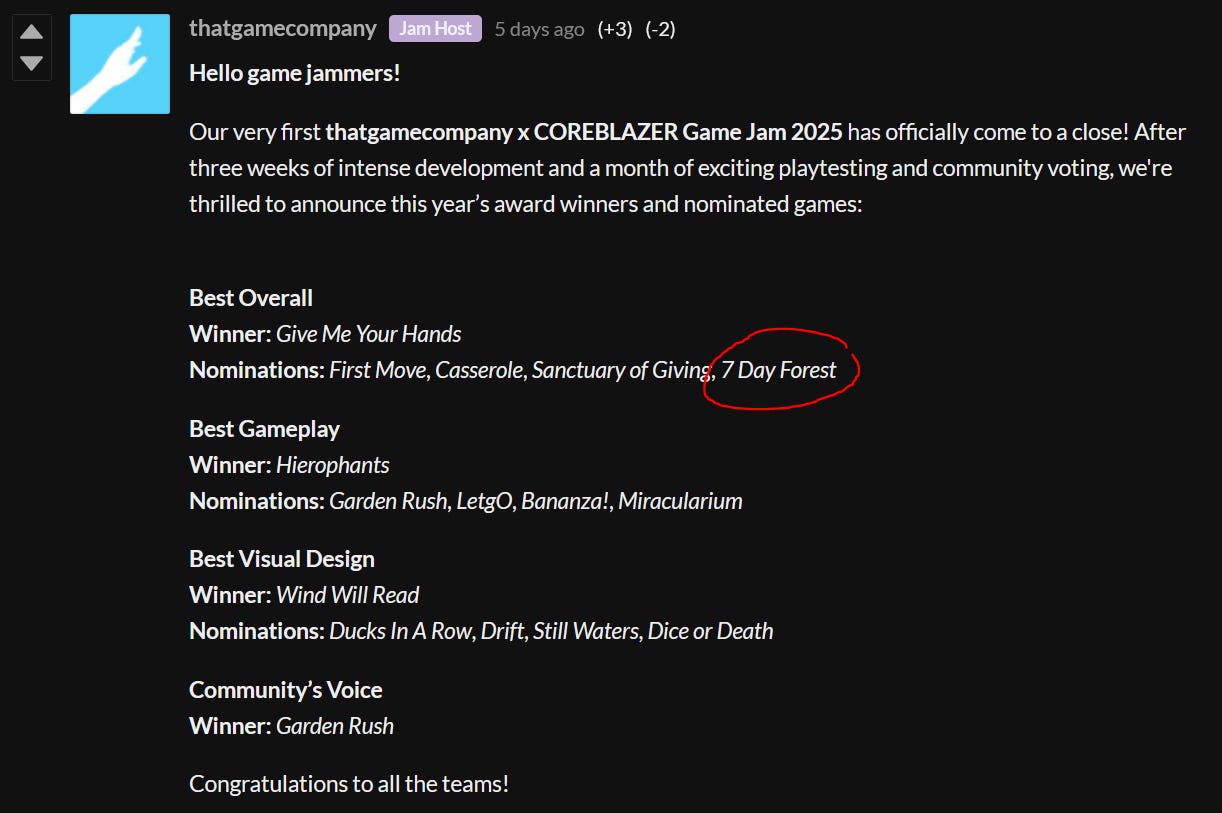
To be completely honest, we were blue when we found out about our nomination (especially Chris), because we thought we had a good chance at winning. Though, now that we have some time to reflect, we’re thankful for the jam—it challenged us to grow and brought us closer with Longiy (more on that later).
..As well as most ratings!
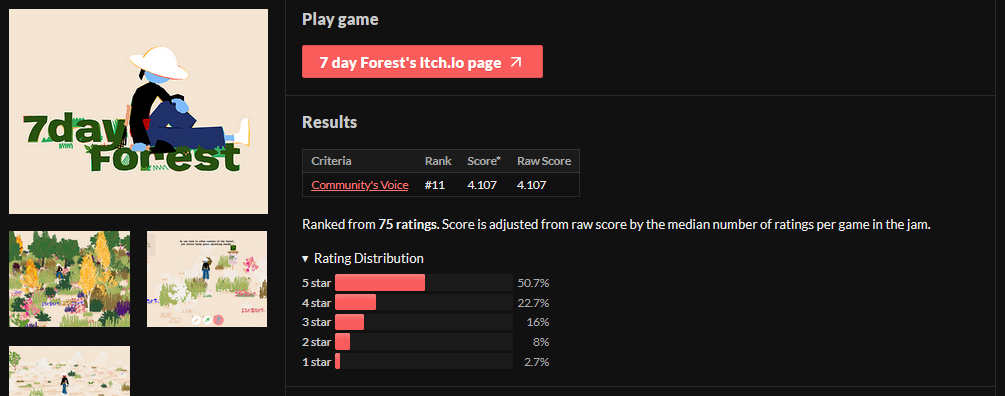
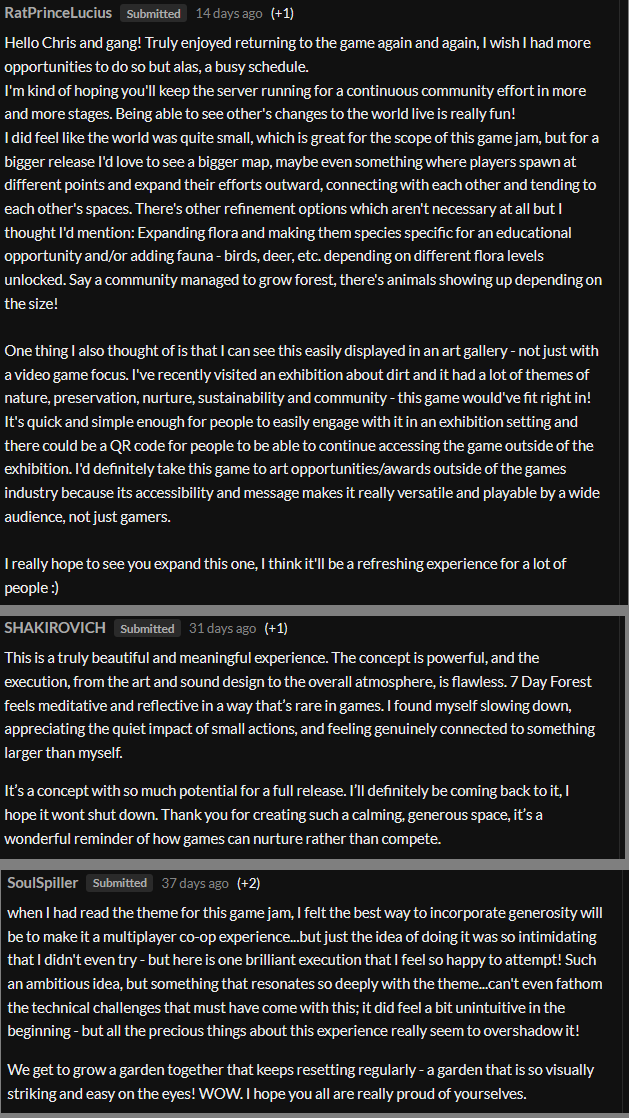
Only other developers who submitted a game may vote and rate other games, so not only did we have 75 ratings, most of them came with valuable feedback.
Figuring out where to begin
In the beginning, we brainstormed together with Longiy, our artist friend, on how to best tackle the difficult theme of generosity. No matter how large our Figma board became, we kept returning to the idea of players helping each other, and more importantly, it must be optional—we really believed that true, genuine generosity only comes when you don’t have to participate.
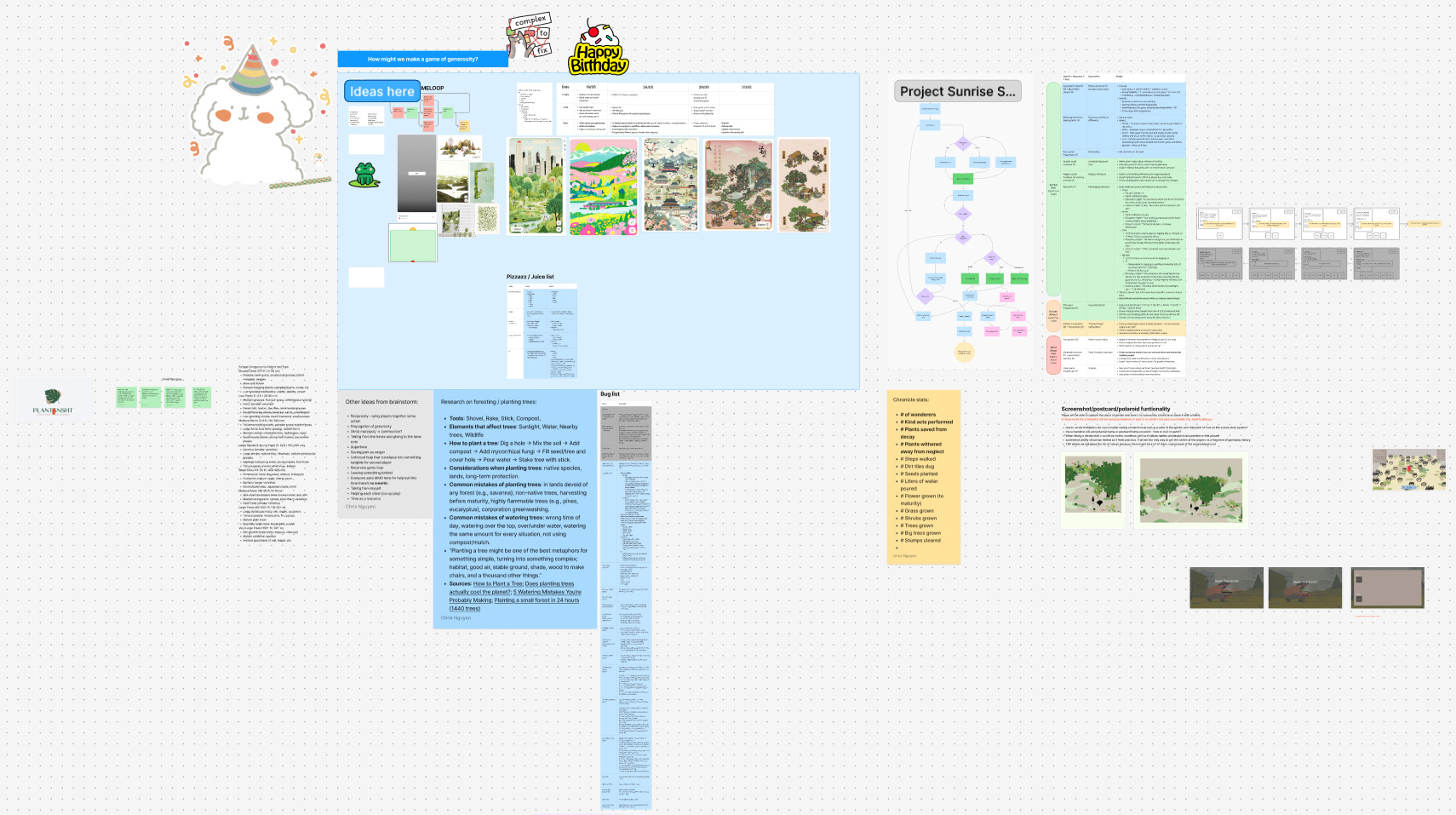
Leaning into that principle, we landed on the idea for 7 Day Forest—players can plant a community forest together. This sounded cute, until we dug down to what needed to be done. Underneath the wholesome atmosphere, this is an online multiplayer game, with a dedicated server. And to fully realize Longiy’s talents, we wanted to dabble in building a 3D world. Before this jam, our only experience was releasing two 2D pixel art, single-player games. Combined with the 3-week time limit, we definitely felt daunted by the challenge ahead.
Art & Tools
With zero experience in 3D nor multiplayer games (yes.. we really went for the hardcore speedrun), the first few days we focused on technical validation and figuring out which tools we needed and can set up quickly. There was no time to spin our own dedicated server, so the natural next step is to explore existing solutions. There were many options, but we landed on Firebase Realtime Database. Judy’s already familiar with the Firebase stack, Godot has a plugin, and the data syncing works well enough.
Next, since neither of us has seen Blender models until this jam, we decided to keep the art style minimalistic. Namely, all our plants in 7 Day Forest are actually just bill-boarded sprites. Only our main character is built in Blender. This also kept the workload manageable for Longiy, who had a full-time job during the day.
Communication
Another challenge we faced during the game jam was that we were spread across the world! Us two were in Taipei during the jam, Longiy works in Austria, and Nick, our composer who we found through the jam forums, is in London. The time difference limited our communication to about 2 hours a day. With development on full throttle and infrequent messaging, it was a challenge to stay aligned. But we think there were a few things we did really well:
Trust - this is the most important. With limited and remote communication, it was easy to start wondering if our teammates are doing what they said they would. But there was no time for that, and each of us worked as if everyone was pulling their weight. Every meeting became us joining new components of the game together, and it really worked out amazing!
Frequent Builds - this is our way of keeping each other updated on our progress and also helps our vision stay focused. Everyone can see where the game is at any time! It also maximized our development time; Judy has had her share of crashing builds minutes before a deadline, and that rite of passage as an engineer made sure we weren’t scrambling for unexpected scenarios towards the end.
Play Testing - we were not afraid to show our early, buggy builds to people! Chris leveraged all his Discord and gamer friends to help play test the game. We got a lot of valuable feedback that helped steer 7 Day Forest to its best.
Conclusion
What did we take away from all this? There are no shortcuts to make a game. Whether you’re a solo developer or collaborating with others, whether you have 3 weeks or 3 years, whether you choose to spend a lot or a few resources on marketing, every game, every project brings its own surprises and challenges. And it’s a constant balance between creativity and constraints.
On that note: we have a bit of an announcement! Longiy and we liked working with each other so much that we’re working on a prototype that we’re hoping to playtest and show you before the end of 2025! There’s not much we can share now, but stay tuned.